Originally conceived as a practical necessity to protect living spaces from insects, flyscreen has long been treated as a secondary element, with little connection to architecture.
Today, an insect screen can be much more than that: it can become an integral part of an interior design project, enhance the quality of living spaces, simplify the installer’s work, make environments more accessible and actively contribute to reducing environmental impact.
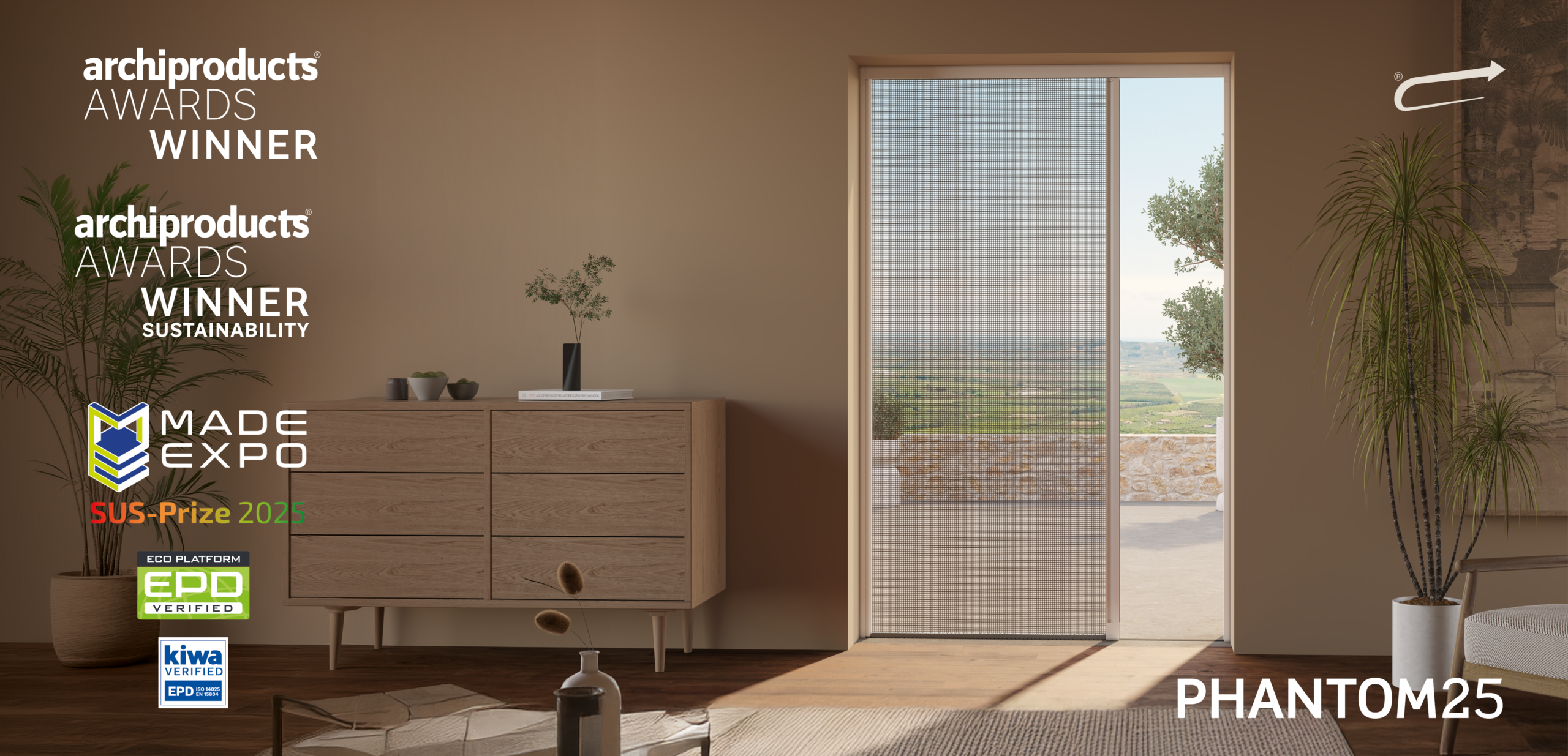
It is within this new design vision that Phantom25 takes shape, the MV Line side-sliding insect screen.
For over thirty years, MV Line has been designing and manufacturing insect screens and systems for protection and living comfort, while maintaining direct control over the entire production chain. Born in a small garage, the company is now one of Italy’s leading players in the design and manufacture of insect screens, solar shading systems, bioclimatic pergolas and roller shutters. With 9 production facilities, more than 640 employees and an established presence in Italy, Germany, France and Spain, MV Line directly controls the entire production chain, from the processing of raw materials to the finished product.
An industrial model that combines research, innovation, build quality and sustainability at every stage of development.
Twenty-five years ago, the first Phantom revolutionised the concept of the insect screen
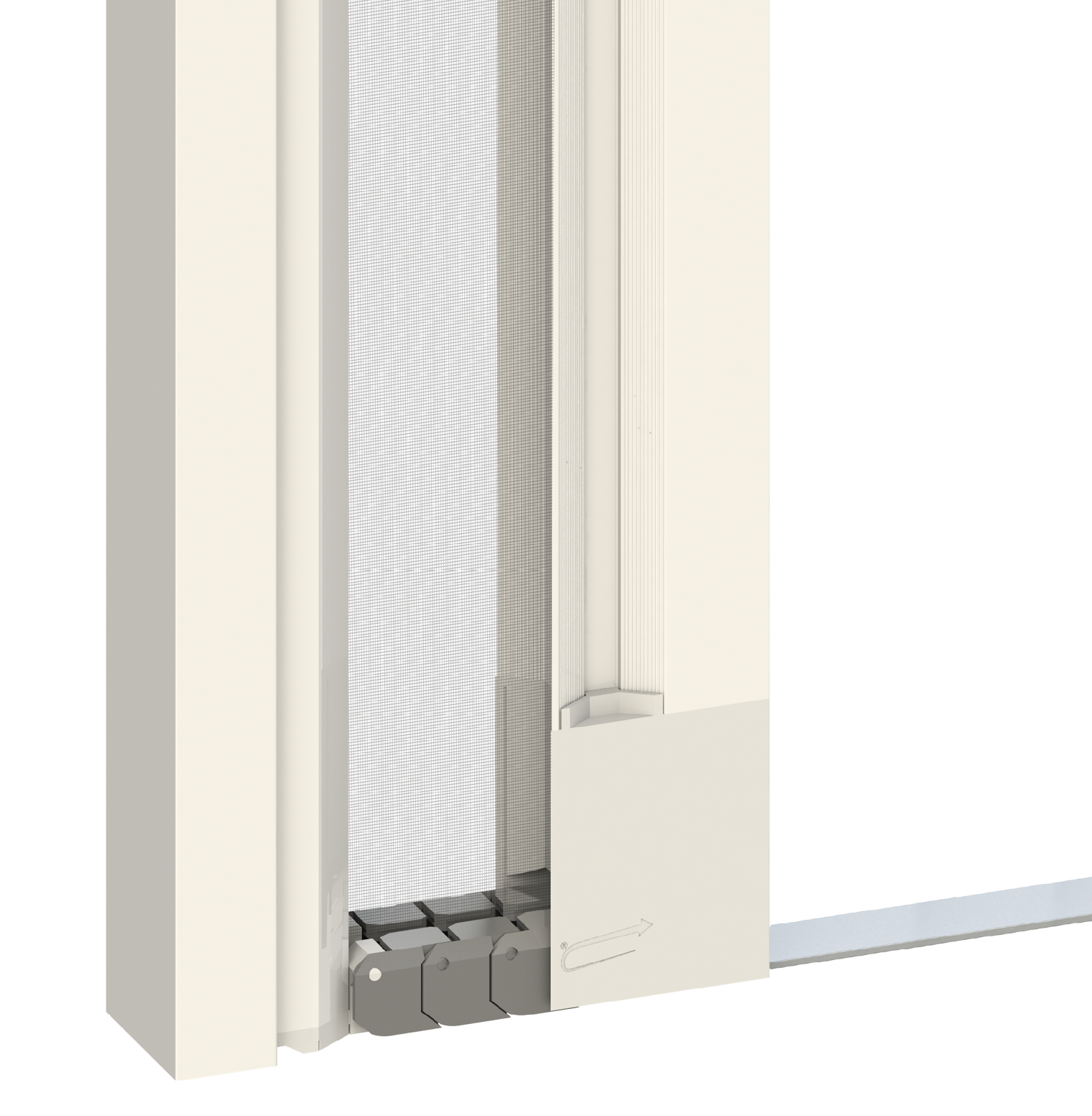
The launch of Phantom marked a turning point, introducing an idea that was destined to rewrite the rules of the sector: eliminating one of the main barriers found in side-sliding insect screens through a retractable bottom guide, improving the passage between indoors and outdoors, together with an entirely new opening system that went beyond purely functional considerations.
Over the years, architecture has changed profoundly. Large glazed surfaces, clean lines, increasingly sustainable buildings and growing attention to accessibility have transformed the way living spaces are designed.
To respond to this evolution, MV Line has continued to invest in research and development, turning its experience into a new design paradigm.
Phantom25 is not simply the evolution of an iconic product, but the perfect synthesis of MV Line’s design approach. A carefully balanced combination of industrial excellence and innovation, capable of enhancing the quality of living through solutions that respond both to the needs of architecture and to those who experience it.
2009, one of Phantom’s first TV commercials.
“The barrier-free fly screen.”
A claim that did not simply describe a technical feature, but expressed a new approach to design. Today, that same principle remains the starting point for Phantom25.
What actually makes Phantom25 a “revolutionary” insect screen?
Every detail of Phantom25 has been developed to address a specific need, improving everyday experience and redefining the very concept of home protection. It is not a single feature that makes Phantom25 a revolutionary system, but the combination of targeted design choices, with every component contributing to making Phantom25, the MV Line side-sliding insect screen, different and “revolutionary”.
From components to installation, from accessibility to sustainability, every element has been rethought to create a more efficient, simpler and more responsible system.
1) Components: less material, more design intelligence
Behind Phantom25 lies an intensive research and development process involving every single component, with the aim of creating a side-sliding insect screen that is more efficient, easier to assemble, more sustainable and capable of maintaining high standards of reliability over time.
The entire project was developed according to one precise principle: achieving maximum performance while using less material, without compromising strength, reliability or durability.
+ Minimising material content
The aluminium profiles and polymer accessories have been completely redesigned to reduce thicknesses without compromising strength, stability or durability over time.
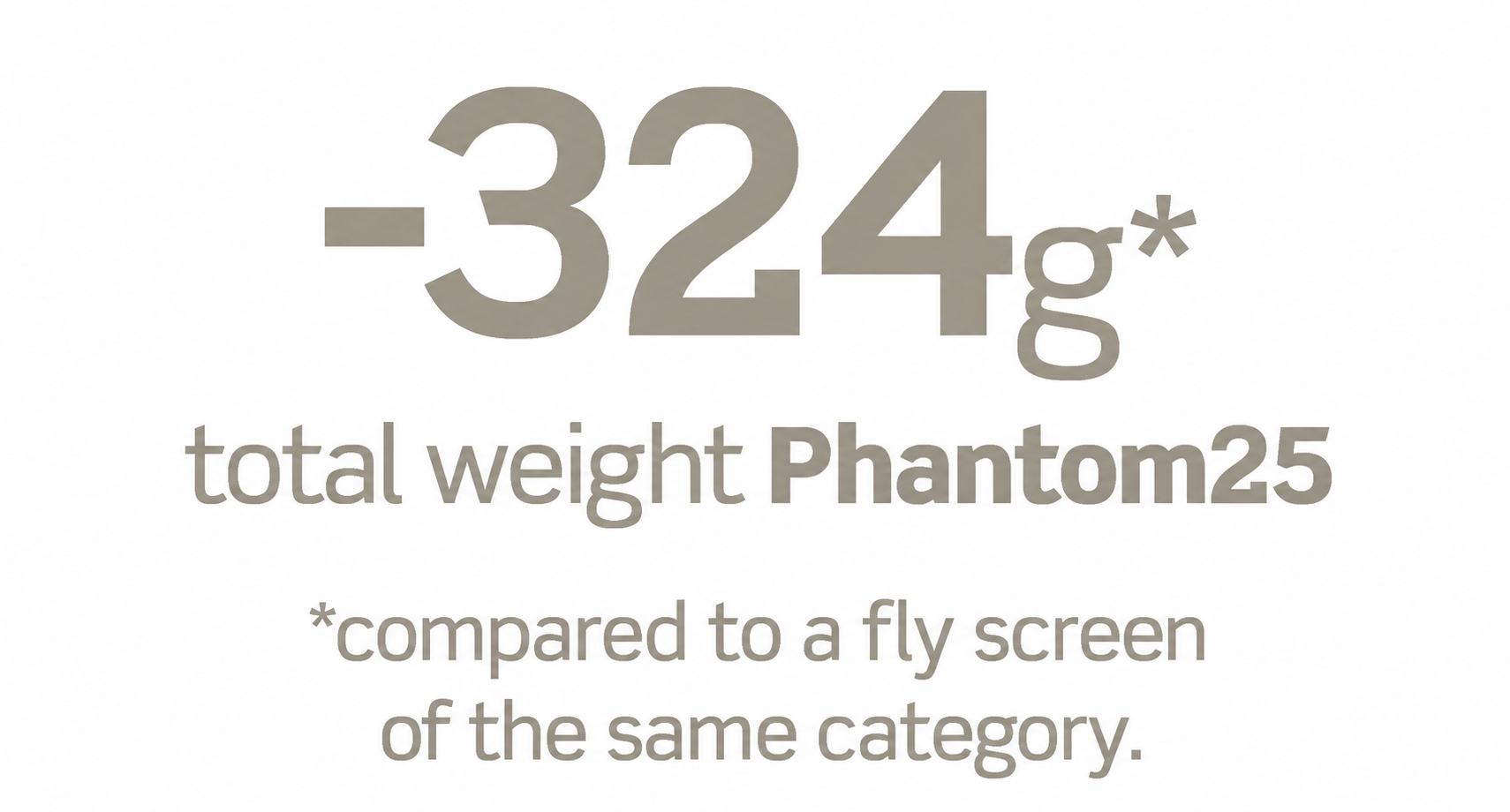
This optimisation has made it possible to reduce the product’s weight by 324 grams compared with an insect screen in the same category, reducing material content and, consequently, environmental impact.
+ Unique and symmetrical accessories
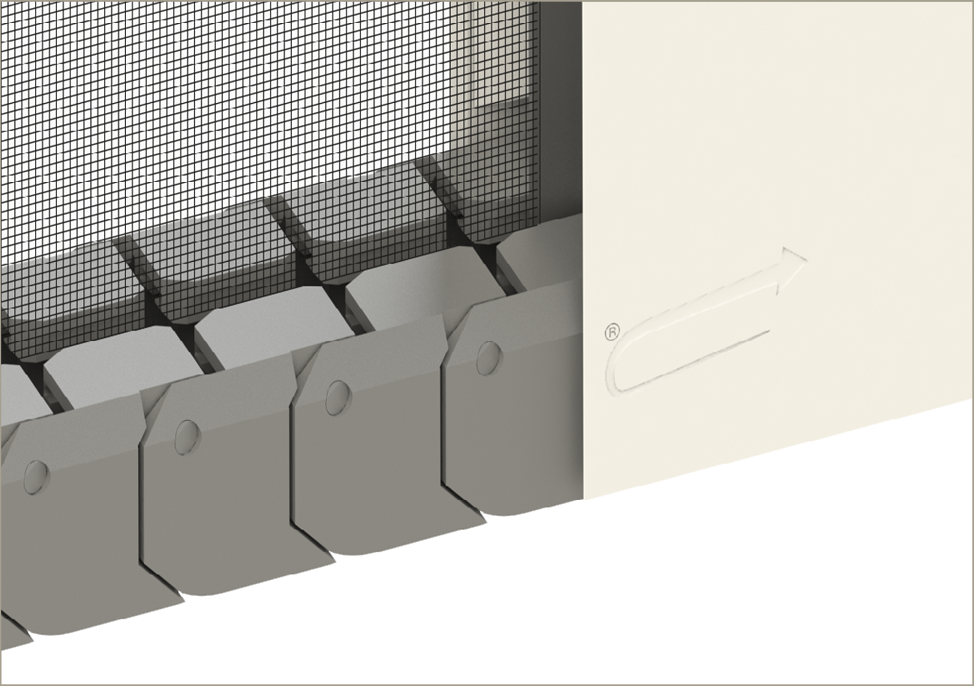
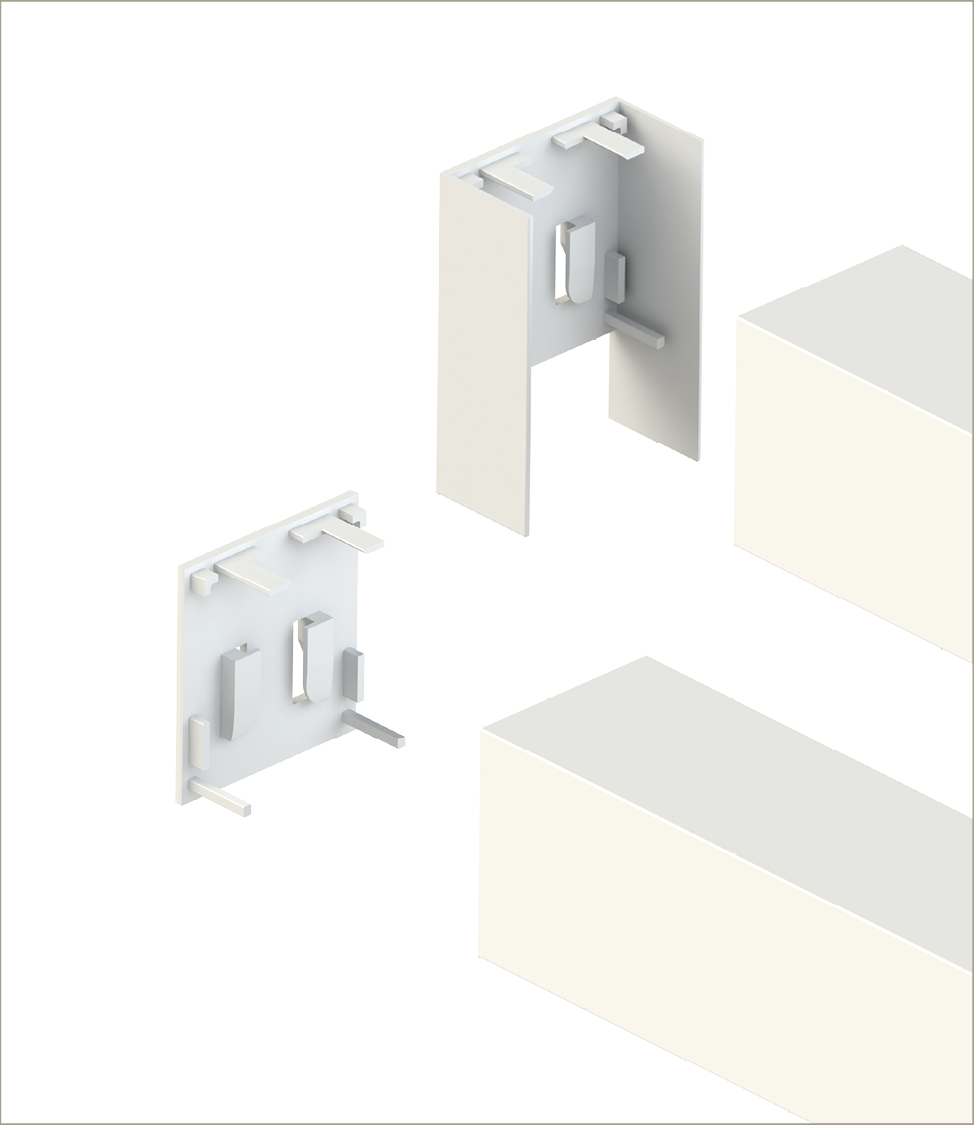
Each component has been redesigned to perform multiple functions simultaneously. Many accessories are symmetrical, multifunctional and free from a specific mounting orientation: a choice that reduces the overall number of components, simplifies assembly, speeds up maintenance and limits the possibility of installation errors.
This design philosophy follows the principles of Design for Disassembly (DfD), an approach that is increasingly central to sustainable design.
Phantom25 has in fact been designed to be easily disassembled at the end of its life cycle. The reduction in the number of components, the use of reversible accessories and fastening systems that favour snap-fit connections over screws and permanent fixings facilitate maintenance, replacement of individual components and material recovery.
It is a detail that often remains invisible to the end user, but represents one of the most advanced aspects of the entire project: designing today while also considering what will happen tomorrow.
+ Reduced overall dimensions
Every proportion has been studied to leave space for the architecture, transforming the insect screen into a discreet yet perfectly integrated element.
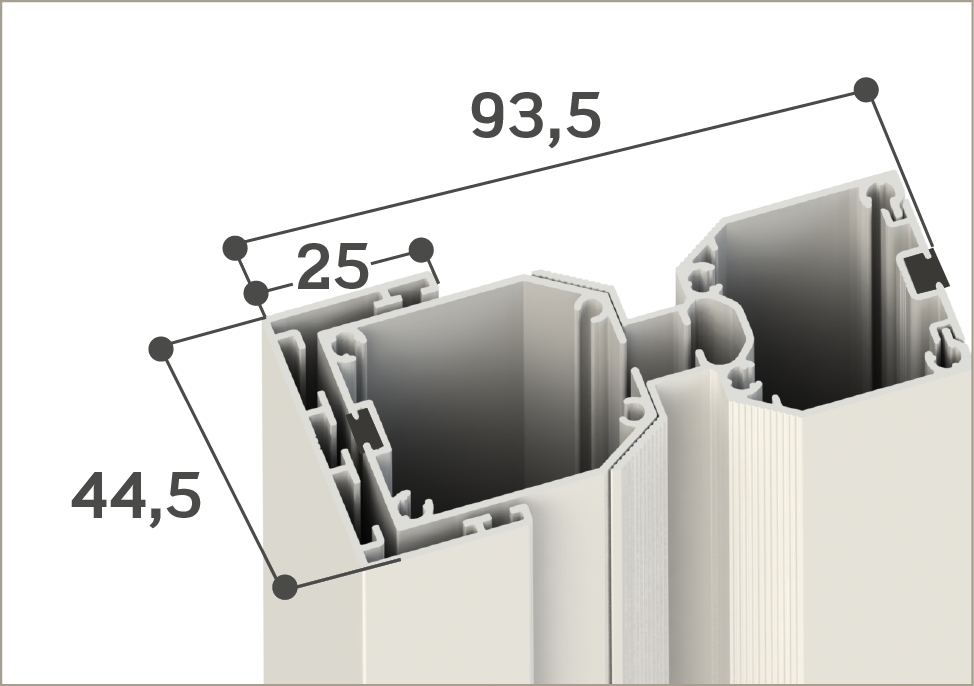
With an overall packing size of just 100 mm (with strike profiles), a 44.5 mm cassette and a side guide of only 25 mm, every proportion has been optimised to make the insect screen increasingly integrated into the architecture, almost invisible to the eye.
The result is an essential system capable of complementing large glazed openings without weighing down their design, allowing light and space to become the true protagonists.
2) Installation: designed to simplify the installer’s work
Phantom25 has also been developed with the needs of installers and window professionals in mind, with the aim of reducing installation times, limiting the possibility of errors and making every stage of installation simpler, more precise and repeatable.
A single configuration can be used both for face-fix installation and recessed installation, avoiding the need to manage different versions and offering greater flexibility on site.
The reversible accessories and symmetrical components further reduce the possibility of errors during installation and simplify operations from the earliest assembly stages. The patented bayonet fastening system is one of Phantom25’s distinctive features. The telescopic upper bayonet ensures quick and secure fastening, while the lower bayonet allows adjustment of up to 15 mm. The self-adjusting system also compensates for out-of-square conditions of up to 10 mm, easily adapting even to less regular openings.
The same design approach extends to maintenance operations: the streamlined component system makes interventions faster and helps reduce service times throughout the insect screen’s life cycle.
3) Design: when function becomes form
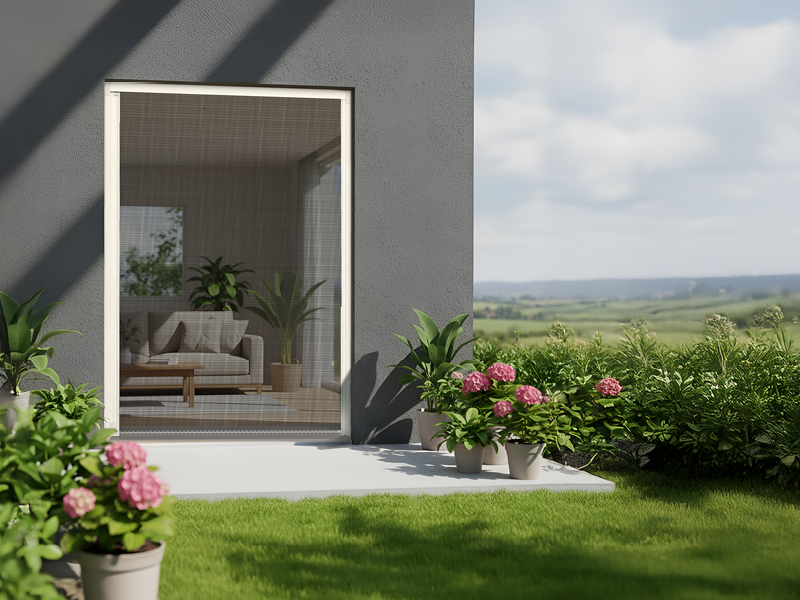
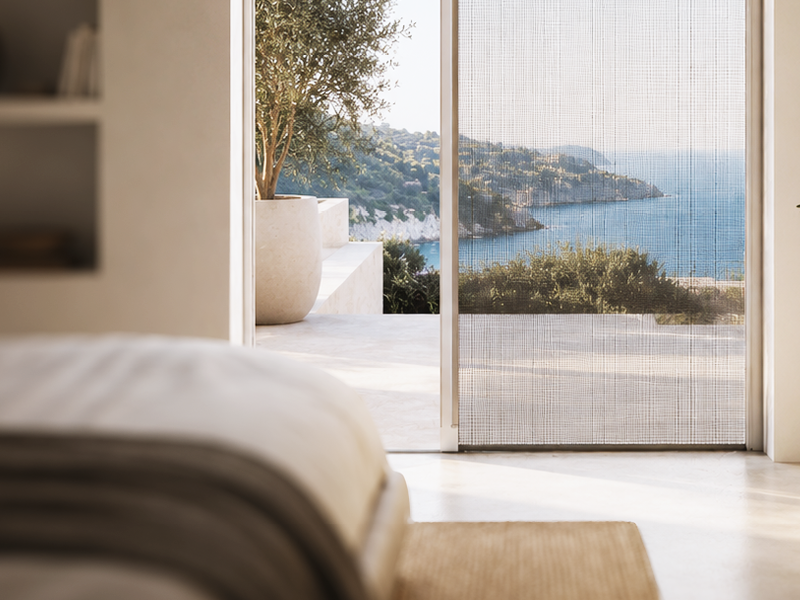
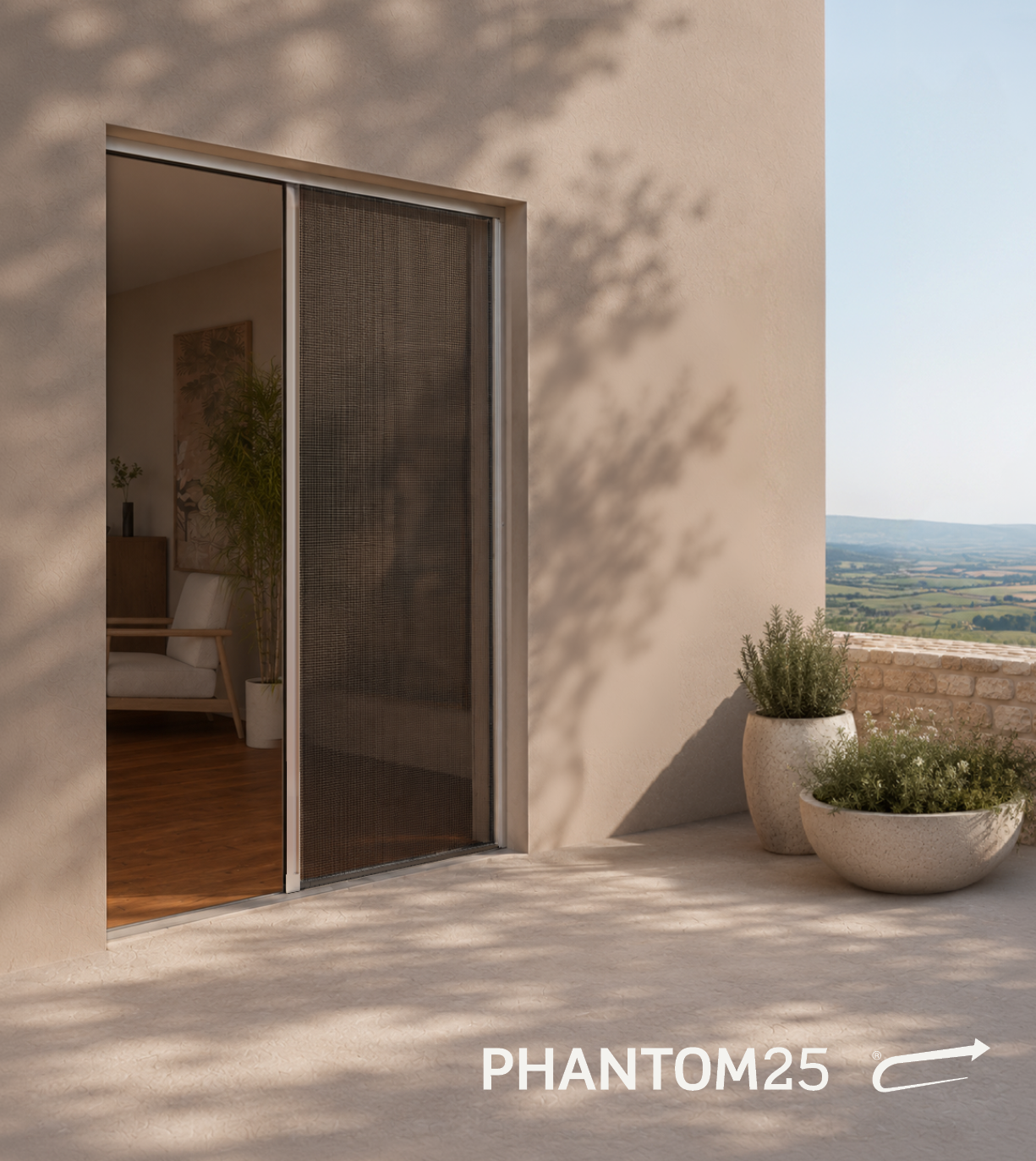
Phantom25 stands out for its exceptionally clean and precise design, with geometric lines that merge seamlessly to create continuity and visual harmony in every detail.
This attention to design gives rise to a sophisticated furnishing element, capable of enhancing spaces without weighing them down and integrating naturally into the architecture until it almost disappears from view.

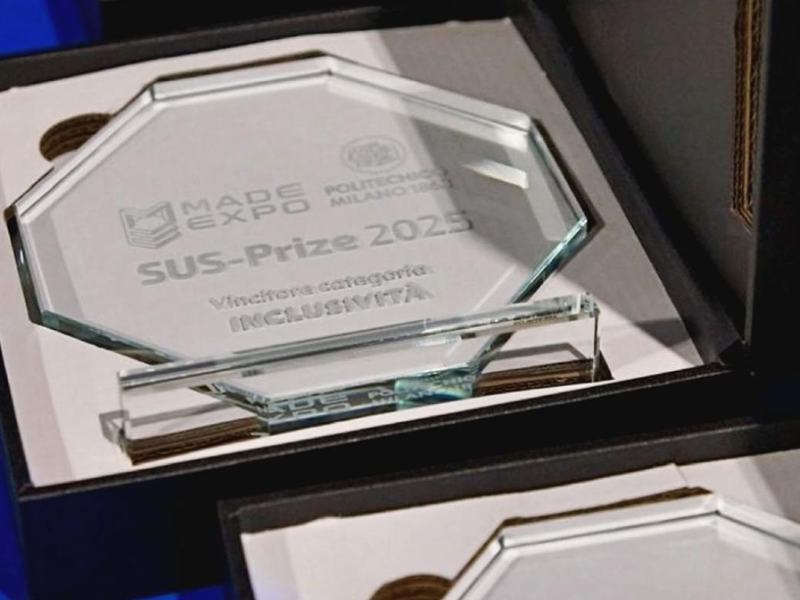
4) Social sustainability: a fly screen with no barriers for anyone… except insects.
Sustainability goes beyond the selection of materials or environmental impact. It translates into the development of solutions that enhance the quality of living, making environments inclusive, safe and immediately accessible.
This is the principle that gave rise to Phantom twenty-five years ago and that continues to guide the evolution of Phantom25 today.
From the very beginning, the objective has been to eliminate every barrier while preserving the purity of the design: an intuitive insect screen capable of adapting to the needs of every person.
An approach that improves everyday comfort and promotes greater freedom of movement without compromise, making spaces more accessible. Because innovation in an insect screen lies in its ability to transform living spaces into a natural, essential and universal experience.
5) Sustainability: designing with tomorrow in mind
The sustainability of Phantom25 is a requirement that comes before production. It is a design approach that considers the entire life cycle of the insect screen, from the selection of raw materials to the recovery of components at the end of their useful life.
Every decision is aimed at reducing environmental impact, optimising resource efficiency and ensuring transparency through verifiable data.
+ EPD Certification

As a pioneer in the sector, Phantom25 has obtained EPD (Environmental Product Declaration) certification and is the first insect screen in Europe with a certified LCA analysis, ensuring transparency regarding its environmental impact.
The EPD represents a concrete tool for designers, companies and clients, providing independently verified environmental data, encouraging more informed material choices and supporting design aligned with the Minimum Environmental Criteria (CAM).
+ Efficient use of resources
The profiles are extruded using 40.3% recycled aluminium, which is infinitely recyclable. The accessories are made using granules certified under the “Plastic Second Life” scheme.
+ Clean energy
The main production facility uses electricity from guaranteed renewable sources.
In addition, 35.5% of its energy requirements are met by energy generated by its own internal photovoltaic system.
+ Local suppliers

The supply chain prioritises local suppliers, reducing travel and transport-related emissions.
Aluminium, the main material used in all our products, is extruded at the MV Extrusion facility, just 102 km from the production plant.
Phantom25 demonstrates how even an apparently simple element can become a complex project
More than the evolution of an icon, Phantom25 represents the natural maturation of MV Line’s vision.
A project that dissolves physical boundaries to promote a new form of living comfort, demonstrating that true innovation lies in the ability to make architecture a free, inclusive and timeless space.